Welcome to your ultimate resource for landscaping tailored to Wellington’s unique climate. Here, you’ll find expert advice, practical tips, and innovative ideas designed to help you create outdoor spaces that not only withstand Wellington’s strong winds and coastal conditions but also flourish beautifully year-round. Whether you’re planning a new garden or enhancing an existing one, our insights will guide you every step of the way to achieve stunning, sustainable results. Let’s embark on this journey to transform your outdoor environment into a thriving, eco-friendly haven.
- Key Takeaways
- Introduction: What Makes Wellington Landscaping Different?
- Core Climate Factors to Design Around in Wellington
- Choosing Plants That Thrive in Wellington Conditions
- Hard Landscaping That Works in a Windy, Hilly City
- Creating Sheltered Outdoor Rooms for Year-Round Use
- Sustainable and Low-Maintenance Ideas for Wellington Gardens
- Seasonal Planning and Project Timing in Wellington
- Working with Local Wellington Landscaping Professionals
- Frequently Asked Questions about Landscaping for Wellington Climate
- How do I make my Wellington garden less windy without blocking my view?
- What are some good low-maintenance plants specifically for exposed Wellington sites?
- Do I need council consent for retaining walls and decks in Wellington?
- Can I successfully grow a vegetable garden in Wellington’s climate?
- How much should I budget for a climate-responsive landscaping project in Wellington?
- Which native plants thrive in Wellington's windy conditions?
- Why are low-maintenance gardens popular in Wellington?
- How can landscaping support mental and physical wellbeing in Wellington?
- What are the benefits of sustainable landscaping in Wellington?
- How does professional landscaping impact property value in Wellington?
- Which Wellington landscaping companies are recognized for quality and innovation?
- What plants are recommended for wind protection in Wellington gardens?
- How can soil diversity in Wellington affect landscaping choices?
- What materials are best for outdoor structures in Wellington's climate?
- How can terracing help with Wellington’s steep terrain?
- How do Wellington landscapers protect delicate plantings from wind?
- Can sustainable landscaping attract better tenants for rental properties?
- Conclusion
Key Takeaways
- Wellington’s windy, coastal, and hilly climate demands wind tolerant plants, robust structures, and smart drainage solutions to create successful outdoor spaces.
- Successful Wellington gardens combine hardy natives like flax, hebes, korokio, and pōhutukawa with climate-resilient hard landscaping such as retaining walls and sheltered decks.
- Orientation to sun and prevailing northerly/southerly winds should drive the layout of lawns, outdoor rooms, and vegetable beds.
- Professional, locally informed landscape design is essential for managing steep sites, erosion, and microclimates across the wellington region from the Kapiti Coast to Lower Hutt.
- This article provides concrete plant suggestions, structural ideas, and seasonal timing tips specifically for Wellington conditions through 2025–2026.
Introduction: What Makes Wellington Landscaping Different?
Wellington’s reputation as the “coolest little capital” extends beyond its café culture and arts scene—it also describes a city where landscaping demands more thought, engineering, and climate awareness than almost anywhere else in New Zealand.
The compact harbour city layout, with densely built suburbs climbing steep hillsides since the early 1900s, creates a unique set of challenges. Strong gusty winds regularly exceed 25 kph year-round, with November averages hitting 27.4 kph. Add salty coastal air, intense rainfall events averaging 1,250mm annually, and surprisingly dry summer spells, and you have conditions that quickly sort climate-appropriate planting from wishful thinking.
Popular wellington suburbs like Miramar, Karori, Island Bay, Khandallah, and the Kapiti Coast each present distinct microclimates. Coastal sites face salt spray and relentless exposure, while sheltered inner-city courtyards can support plants that would shred on exposed ridgelines. Hilltop properties deal with wind funnelling between houses, and south-facing gullies stay damp and shaded for much of winter.
Understanding these local conditions is the first step toward creating a wellington garden that actually thrives year round rather than struggling through each season.
Core Climate Factors to Design Around in Wellington
Every design decision in wellington landscaping should reference wind, sun, rain, and salt exposure on the specific site. Getting these factors wrong means expensive failures; getting them right creates gardens that perform reliably for decades.
Wind: The Dominant Force
Wellington’s wind patterns follow predictable rhythms. Northerlies bring warmer, gustier conditions through spring and summer, while southerly changes arrive with sharp temperature drops, persistent showers, and that characteristic blast of Antarctic air through Cook Strait.
On exposed ridges in suburbs like Brooklyn, Ngaio, and Kelburn, gusts can exceed 120 km/h during storms. Even on calmer days, sustained winds of 20-30 kph dry out foliage, stress shallow root systems, and physically damage plants with flexible but weak stems.
Effective landscaping wellington strategies include:
- Multi-layered shelterbelts that filter wind rather than creating turbulent eddies
- Low, dense planting on exposed boundaries before introducing taller specimen trees
- Structural windbreaks using slatted screens or hedging at critical points
Rainfall and Drainage
Heavy rainfall is a Wellington constant, particularly from May to August when the city sees 12-13 rainy days per month and only 3-4 hours of sunshine daily. May alone can dump 120mm over 12 days.
Many hillside sections feature clay soils or mixed fill from decades of subdivisions, creating drainage patterns that concentrate water in unexpected places. Without proper management, this leads to:
- Waterlogged lawns and garden beds
- Erosion on slopes
- Foundation and retaining wall damage
- Root rot in poorly draining planting areas
Solutions include subsoil drains, swales directing water away from structures, permeable paving surfaces, and raised beds for areas with persistently wet soil conditions.
Sun and Aspect
Wellington’s 2,000 annual sunshine hours—more than London’s 1,675 but well below Mediterranean cities—mean maximising every ray counts. North and north-west facing slopes in suburbs like Brooklyn and Ngaio receive substantially more growing hours than shaded south-facing gullies.
Site analysis should track sun movement across seasons, noting where shadows fall from neighbouring houses, mature trees, and the house itself. This drives decisions about:
- Lawn and garden bed placement
- Positioning of outdoor living areas
- Species selection for different zones
Salt and Coastal Exposure
Properties in Seatoun, Lyall Bay, Eastbourne, and other coastal streets face regular salt spray that burns foliage and corrodes unprotected metals. Landscaping in wellington coastal zones requires:
- Salt-tolerant native species adapted to these conditions
- Marine-grade fixings and hardware for all structures
- Regular rinsing of plants after significant salt events
- Material selection that accounts for accelerated corrosion
Choosing Plants That Thrive in Wellington Conditions
Climate-appropriate planting dramatically reduces failures, replanting costs, and maintenance time. The difference between a garden that struggles and one that thrives often comes down to choosing plants proven in local conditions.
Native Plants for Wind and Salt Tolerance
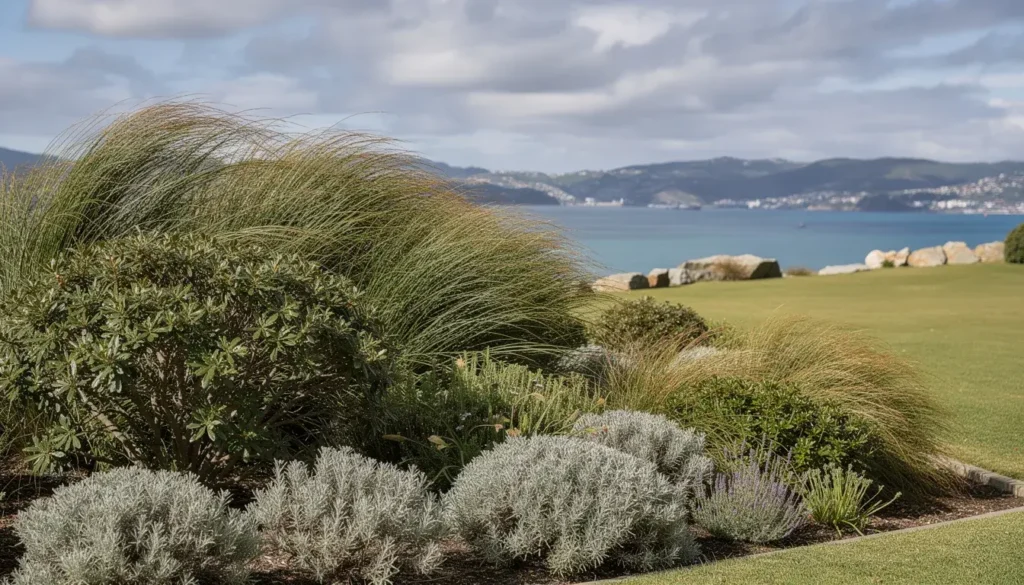
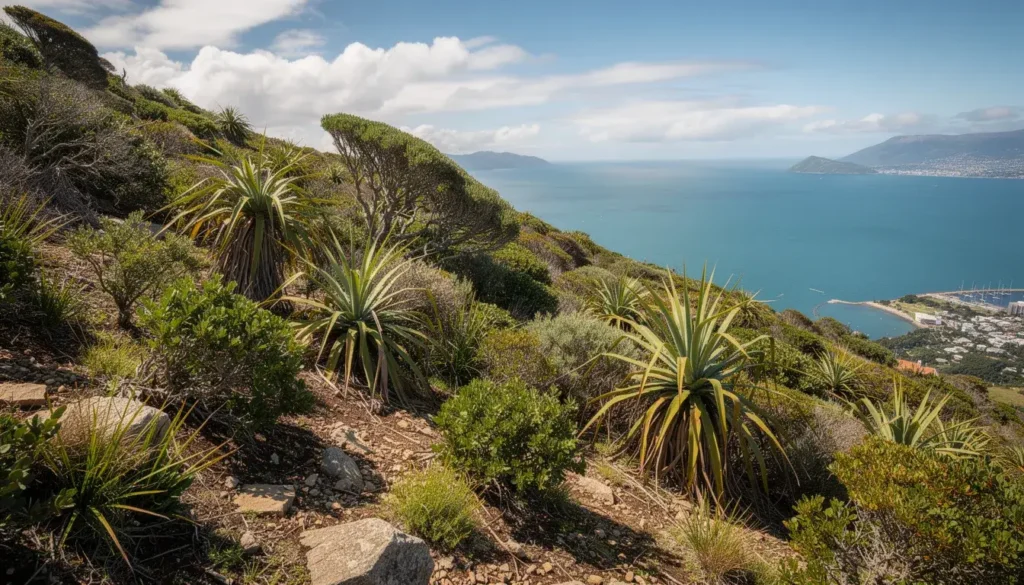
Native species have evolved over millennia to handle exactly what Wellington throws at them. These plants exhibit thigmomorphogenesis—mechanical stress actually thickens their stems and shortens growth, creating naturally compact, wind resistant forms.
Key native garden performers include:
| Plant | Height | Conditions | Maintenance |
|---|---|---|---|
| Harakeke (Phormium tenax) | 2-3m | Full exposure, poor soils, frosts to -5°C | Low |
| Tī kōuka (Cordyline australis) | 6-12m | Coastal, wind, salt | Low |
| Korokio (Corokia cotoneaster) | 1-2m | Exposed sites, hedging | Low-medium |
| Coprosma robusta (Karamu) | 3-5m | Salt, wind, shade tolerant | Low |
| Hebe stricta | 1-2m | Sheltered borders | Medium |
| Pōhutukawa (Metrosideros excelsa) | 10-20m | Coastal sites only | Low |
| Mānuka (Leptospermum scoparium) | 2-4m | Poor soils, erosion control | Low |
These native species typically require 70% less water than exotic plants once established, and studies show pōhutukawa retains 80% of its foliage in salt spray conditions compared to just 50% for European oaks.
Hardy Exotics for Wellington
While native plants form the backbone of resilient wellington landscapes, selected exotic plants can add colour, fragrance, and variety in more sheltered positions:
- Rosemary and lavender: Thrive in sunny, well-drained spots and handle dry summer spells
- Escallonia: Tough hedging for coastal sites with attractive flowers
- Griselinia: Excellent screening in sheltered urban spots
- Ornamental grasses: Lomandra and similar varieties handle wind and movement beautifully
Planting Strategies by Exposure
Exposed hilltops (Brooklyn, Kelburn ridgelines):
- Focus on low, dense shelter planting first
- Keep shrubs under 1.5m until shelterbelts establish
- Use proven wind tolerant species only
- Accept slower growth rates in exchange for resilience
Sheltered inner-city courtyards (Te Aro, Thorndon):
- Taller feature trees become possible
- Climbers on fences and walls
- More exotic plants with interesting foliage
- Greater variety in texture and colour
Practical planting details:
- Stake all new trees and shrubs against wind for first 2-3 years
- Mulch heavily to retain moisture during dry summer northerlies
- Space plants adequately for airflow—Wellington’s 73-78% humidity can foster fungal problems in congested plantings
Hard Landscaping That Works in a Windy, Hilly City
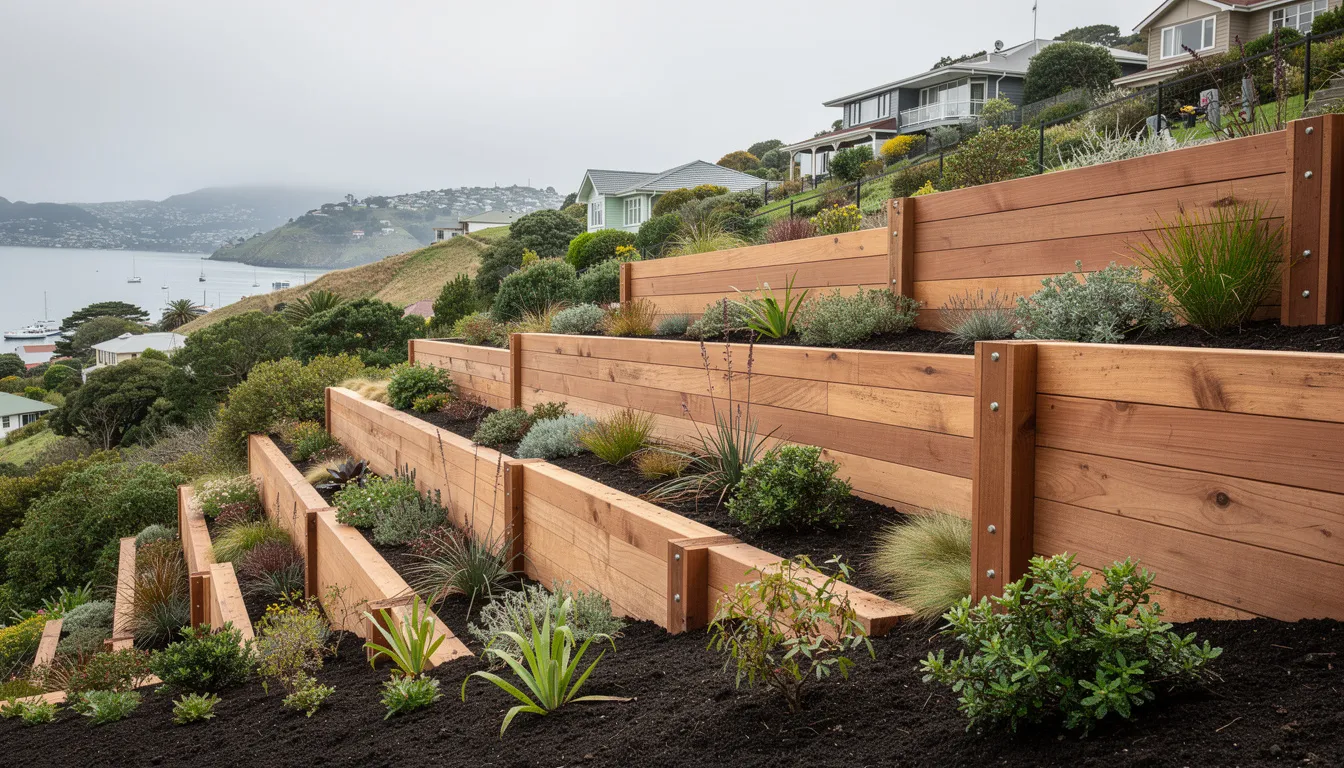
Wellington’s steep terrain from Newtown to Johnsonville often needs structural solutions before any planting can succeed. The goal is creating tiered, usable platforms rather than one steep, unusable lawn.
Retaining Walls: Engineering Meets Aesthetics
Retaining walls are essential infrastructure on most hillside properties, serving both engineering and visual functions. Options include:
| Material | Best For | Considerations |
|---|---|---|
| Timber | Smaller walls, natural look | Requires quality treated timber, eventual replacement |
| Concrete block | Large structural walls, modern aesthetic | Engineering usually required over 1m height |
| Gabion baskets | Contemporary look, drainage | Heavy, requires solid foundations |
| Reinforced concrete | Maximum strength, steep sites | Professional engineering essential |
Any retaining wall over certain heights triggers council consent requirements, and Wellington’s known slip-risk areas often require engineered designs regardless of size.
Decks and Terraces
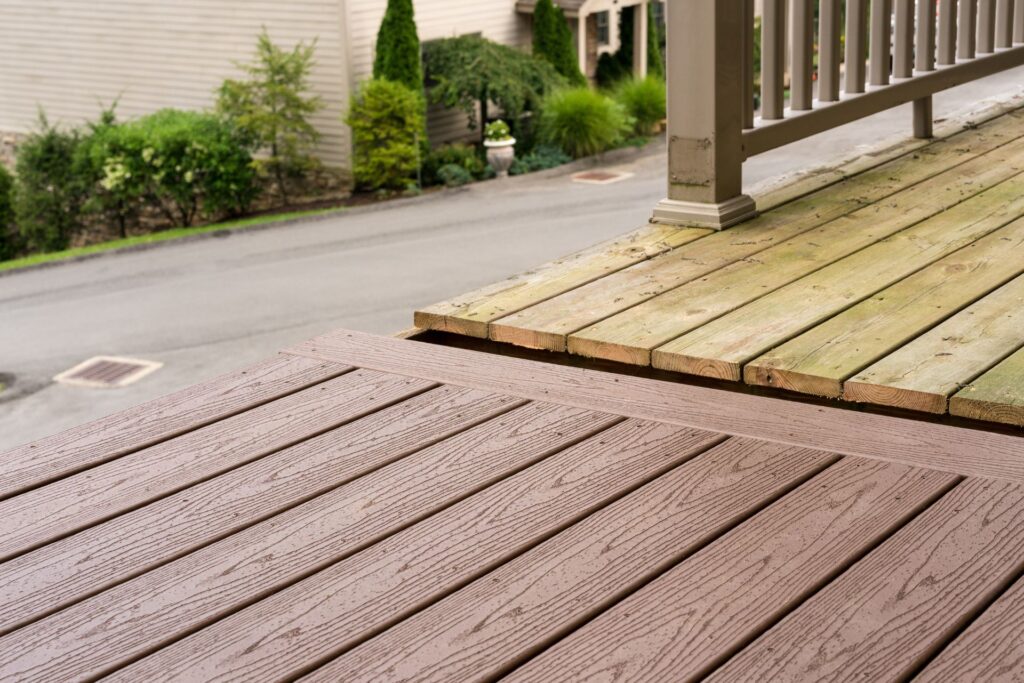
Wellington decks must handle both spectacular views and substantial wind loads. Design considerations include:
- Fixing methods rated for wind exposure zones
- Balustrade options that reduce wind without blocking views
- Slip-resistant surfaces essential for wet winters
- Quality craftsmanship with marine-grade fixings near the coast
- Durable materials that withstand UV and rain cycles
Paths and Steps on Steep Terrain
Safe access on steep sections requires careful gradient design, grippy paving or timber surfaces, and good lighting. Many older wellington suburbs have challenging access ways where proper path design prevents accidents and improves property value.
Compliance matters: Work with professionals who understand local council consent triggers around wall height, deck construction, and handrail requirements. What seems like a simple project can quickly require engineering input on unstable or steep sites.
Creating Sheltered Outdoor Rooms for Year-Round Use
Wellington homeowners dream of using decks and patios from spring through autumn—but wind and sudden southerly changes can make outdoor space unusable without proper planning.
Layout Strategies
Place primary outdoor living areas on the most sheltered side of the house, typically north to north-west in suburbs like Karori, Tawa, and Khandallah. This captures afternoon sun while the house itself blocks prevailing southerlies.
Consider how you’ll create outdoor spaces that work across seasons:
- Morning sun areas for breakfast use
- Afternoon shade in summer without losing winter warmth
- Wind shadow zones for evening entertaining
Structural Shelter Options
Pergolas and louvred roofs offer adjustable shade and rain protection. Key considerations:
- Aluminium frames handle Wellington conditions better than untreated timber
- Louvres can close completely during rain events
- Engineering must account for wind uplift forces
Screens and planting for wind filtering:
- Slatted timber screens reduce wind speed while maintaining some transparency
- Glass balustrades cut wind at seating height while preserving views
- Dense hedging filters wind gradually, avoiding the turbulence created by solid barriers
- Semi-transparent planting staggered at different heights creates layered protection
Extending Seasonal Use
Outdoor rooms in Wellington’s climate benefit from:
- Built-in seating with cushion storage
- Outdoor kitchens positioned in sheltered zones
- Fire pits or outdoor heaters extending evening use through cooler months
- Weather-resistant materials that handle the outdoor environment without constant maintenance
The balance between sun access and wind protection is the key design challenge—too much shelter and you lose the sun; too little and the space sits unused on all but the calmest days.
Sustainable and Low-Maintenance Ideas for Wellington Gardens
Sustainable practices in wellington landscaping aren’t just eco friendly—they’re practical responses to local labour costs, water costs, and the realities of busy household schedules.
Water Management
Wellington’s wet winters and occasional dry spells create opportunities for smart water conservation:
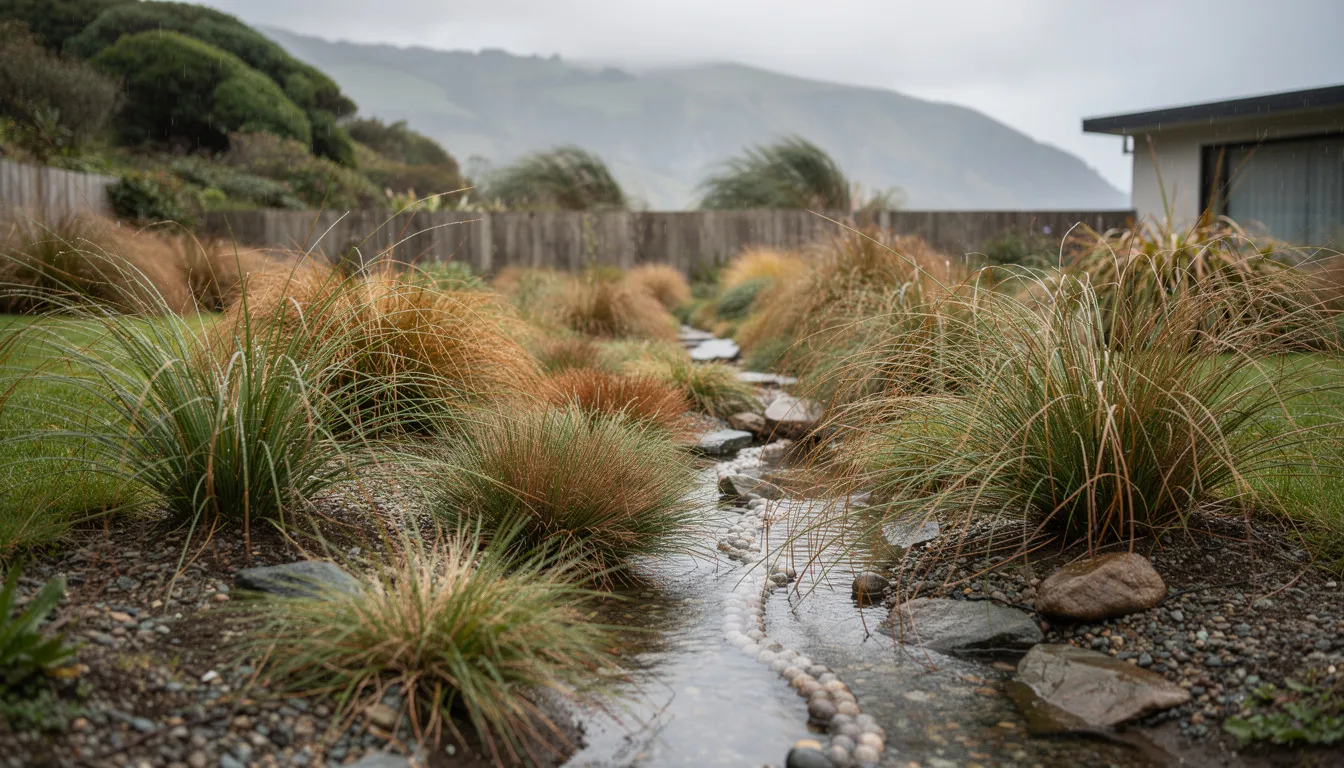
Rain gardens using Carex secta sedges filter the 1,250mm annual rainfall while providing habitat for local wildlife. These perform far better than impermeable paving that exacerbates flash flooding during southerly events.
Rainwater tanks capture winter rain for irrigation during drier periods, particularly useful on the Kapiti Coast where summer dry spells can be more pronounced.
Drip irrigation systems deliver water directly to root zones, avoiding wind drift that wastes 30-50% of overhead sprinkler output on gusty Wellington days.
Lawn Alternatives
Traditional lawns struggle on steep slopes and shaded areas throughout wellington suburbs. Consider:
- Hardy groundcovers like Microlaena stipoides that reduce mowing by 80%
- Artificial turf in small shaded courtyards where grass fails anyway
- Smaller lawn areas focused on usable flat sections
- Native garden plantings replacing struggling grass on slopes
Soil Improvement
Wellington’s clay and fill soils benefit from systematic improvement:
- Compost addition enhancing friability and drainage
- Mulching to conserve moisture and suppress weeds
- Raised beds for vegetable growing and areas with wet or compacted ground
- Regular maintenance schedules for mulch top-up and soil feeding
Low Maintenance Landscapes
The combination of natives and selected exotics creates gardens that busy families can keep tidy with minimal effort. Focus on:
- Evergreen structure plants providing year round interest
- Tough groundcovers suppressing weeds between feature plants
- Mulched beds reducing watering and weeding time
- Native plants requiring less fertiliser, pesticide, and water once established
This approach suits modern Wellington living—from rentals in Newtown to townhouses in Te Aro where garden maintenance time is limited but aesthetic appeal still matters.
Seasonal Planning and Project Timing in Wellington
Timing matters in Wellington. Wet winters, windy equinoxes, and milder springs all affect both construction and plant establishment.
Best Months for Hard Landscaping
Major construction works—retaining walls, decks, paths—run most smoothly in:
- Late summer to early autumn (February-April): Drier conditions, longer days, better working conditions
- Settled late spring (October-November): Before the wettest winter months, though spring can still bring unsettled weather
Avoid scheduling major earthworks in winter when heavy rainfall creates delays, site damage, and increased costs.
Optimal Planting Windows
| Planting Type | Best Timing | Why |
|---|---|---|
| Trees and shrubs | Late autumn to early winter (April-June) | Establishes roots during wet season before summer stress |
| Frost-tender species | Mid-spring to early summer (October-December) | After frost risk, with growing season ahead |
| Vegetable garden | Spring onwards, with succession planting | Matches crop requirements to warming temperatures |
Wellington’s 5.5-7 sunshine hours in spring and early summer support strong root development when combined with adequate rainfall.
Project Sequencing
The logical order for a comprehensive landscaping project:
- Complete retaining walls and drainage infrastructure
- Install decks, paths, and hard surfaces
- Prepare planting beds and improve soil conditions
- Undertake large-scale planting, trees first
- Finish with groundcovers, mulching, and fine details
This protects new plants from construction damage and allows structures to settle before planting around them.
Planning Ahead for 2025-2026
Reputable wellington landscapers often book several months in advance, particularly for larger projects requiring engineering or council consents. Starting conversations now for a spring 2025 project completion makes sense, and autumn 2025 planting gives new gardens a full winter establishment period before their first summer.
Working with Local Wellington Landscaping Professionals
Local expertise is critical in Wellington due to complex council rules, wind exposure zones, and hillside engineering requirements. A wellington landscaping company with proven experience handles challenges that would overwhelm less experienced operators.
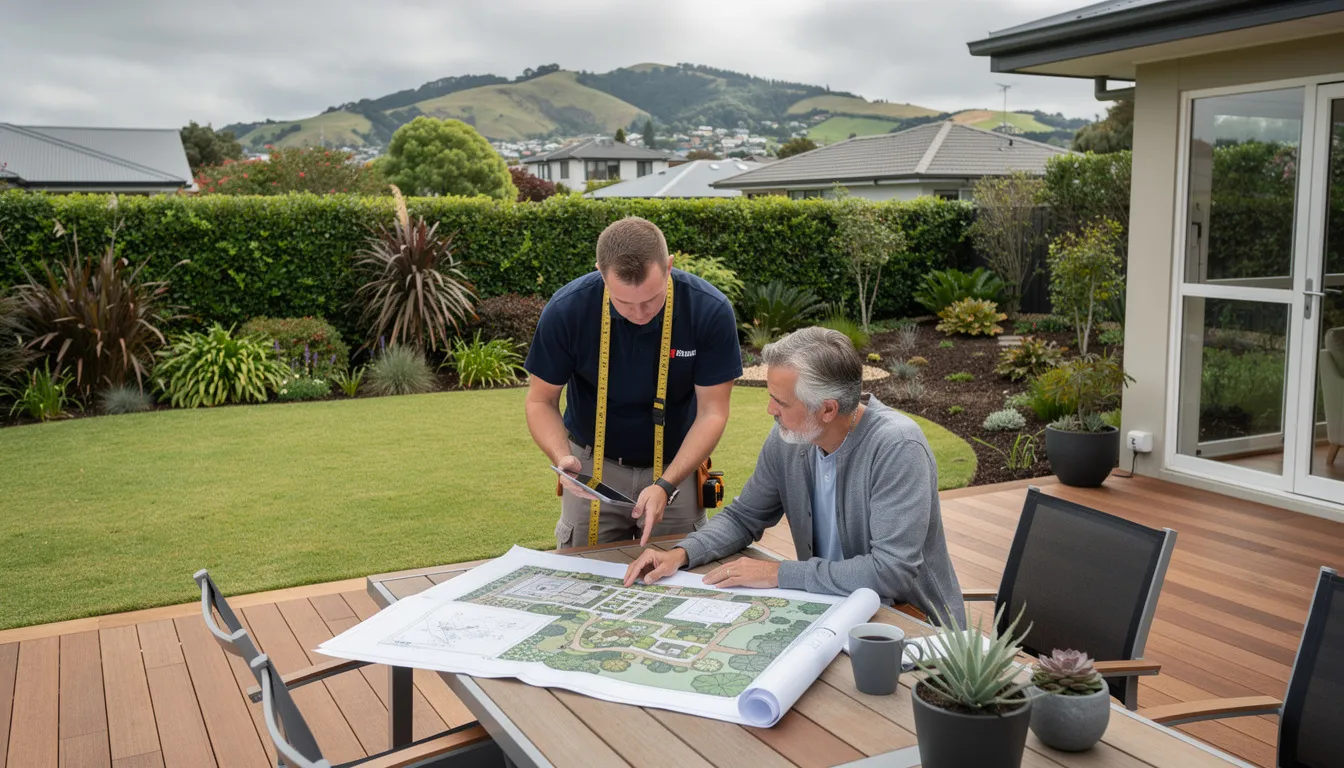
What a Thorough Site Visit Should Cover
Trusted wellington landscapers will assess:
- Sun tracking: Where sunlight falls across seasons
- Wind observation: How prevailing winds affect different zones
- Soil conditions: Clay depth, drainage capacity, compaction
- Drainage patterns: Where water flows during heavy rainfall
- Neighbour considerations: Shading from adjacent properties
- Access constraints: How materials and equipment reach the site
This thorough understanding of your specific property drives all subsequent design decisions.
The Professional Process
Expect a concept-to-completion approach including:
- Concept design: Initial ideas responding to site analysis and your priorities
- Budget alignment: Matching aspirations to realistic costs
- Detailed plans: Specifications for construction and planting
- Consents: Handling council applications where required
- Construction: Quality craftsmanship throughout the build
- Finishing touches: Final planting, mulching, and handover
What to Look For
When evaluating wellington landscaping services, consider:
- Portfolios showing successful projects on steep sites and coastal locations
- Experience with compact urban gardens as well as larger properties
- Understanding of local biodiversity and native birds habitat creation
- Clear communication about costs, timelines, and garden maintenance expectations
- References from previous clients in similar situations
- Competitive pricing that reflects quality rather than cutting corners
Many landscaping services offer a free consultation to discuss your landscaping project and provide initial guidance on possibilities and budget ranges.
Frequently Asked Questions about Landscaping for Wellington Climate
How do I make my Wellington garden less windy without blocking my view?
The key principle is filtering wind rather than fully blocking it. Solid barriers create turbulence on the leeward side that can actually worsen conditions in your outdoor space.
Use staggered planting with low, dense shrubs and taller specimens arranged to break up airflow gradually. Native shelter belts sitting below eye level preserve views across the harbour or hills while cutting wind speed by 50-70% in their lee.
On decks, glass or slatted balustrades reduce wind at seating height while maintaining sightlines. Combine these with strategic planting—a row of Corokia cotoneaster hedge below deck level protects without obstructing the view that makes Wellington properties special.
Semi-transparent timber screens at sitting height create calm zones for evening entertaining while letting you enjoy that panorama from standing positions.
What are some good low-maintenance plants specifically for exposed Wellington sites?
For truly exposed sites, focus on native species proven in these conditions:
- Harakeke (flax): 2-3m height, tough as nails, dramatic form
- Toetoe: Native grass with graceful movement, 1-2m
- Coprosma varieties: Dense, salt-tolerant, various sizes from groundcover to 3m
- Korokio: Compact, wind-sculpted naturally, 1-2m
- Dwarf pōhutukawa: For coastal sites with room, 3-5m
Hardy exotics that cope well include rosemary (if sunny and well-drained), Lomandra varieties, and ornamental grasses like Miscanthus.
Once established—typically after 2-3 years—these plants need minimal watering and simple annual maintenance: a prune to shape in late winter and mulch top-up in spring. They truly deliver low maintenance landscapes that look good year round.
Do I need council consent for retaining walls and decks in Wellington?
Council consent triggers vary based on wall height, deck height, and proximity to boundaries. While specific thresholds can change, as a general guide:
- Retaining walls over 1.5m typically require building consent
- Decks over certain heights above ground level trigger consent
- Structures close to boundaries may require resource consent
- Any wall retaining a public footpath or road requires engineering
Wellington’s known slip-risk areas often require engineered designs regardless of size. Older wellington suburbs built on steep hillsides frequently have ground conditions that demand professional assessment.
The safest approach is working with wellington landscaping professionals who handle consents routinely and know when engineering input is essential. Getting this wrong can mean expensive remediation—or worse, structural failure.
Can I successfully grow a vegetable garden in Wellington’s climate?
Absolutely—but success depends on creating the right microclimate. Wellington’s cooler temperatures and wind exposure mean you can’t simply plant tomatoes in an open bed and hope for the best.
Key strategies for productive herb garden and vegetable growing:
- Position in sunny, sheltered spots: North-facing patios, terraces, or the lee of the house work well
- Use raised beds: Improves drainage on clay soils and warms faster in spring
- Provide wind protection: Cloches, mesh screens, or surrounding shelter planting
- Choose appropriate crops: Brassicas, silverbeet, and herbs handle cooler, breezy conditions better than heat-lovers
For tomatoes and summer crops, consider using north-facing balconies or creating microclimates against dark-coloured walls that absorb and radiate heat. A backyard olive trees grove is possible in warmer, sheltered spots—Oriental Bay and similar favoured locations grow them successfully.
How much should I budget for a climate-responsive landscaping project in Wellington?
Project costs vary enormously based on scope, site challenges, and material selection:
| Project Scale | Indicative Range | What’s Included |
|---|---|---|
| Small courtyard refresh | $5,000-$15,000 | Planting, simple paths, garden beds |
| Mid-sized garden transformation | $25,000-$60,000 | Deck or patio, planting, basic retaining |
| Full hillside development | $80,000-$200,000+ | Major retaining walls, decks, comprehensive planting |
Factors that significantly affect price:
- Engineering requirements: Steep or unstable sites need professional design
- Access constraints: Difficult access means manual handling or crane hire
- Material selection: Marine-grade fixings and durable materials cost more upfront but last longer
- Curb appeal features: Water features, lighting, and specimen trees add to budgets
Seek detailed written quotes and ask about phasing options to spread costs over multiple seasons if needed. A smaller, well-executed phase one delivers far more satisfaction than an overly ambitious project that stalls halfway through.
Quality wellington landscaping project investments typically return through improved property value, reduced maintenance costs, and—most importantly—outdoor spaces you actually use and enjoy.
Wellington’s unique climate challenges are real, but they’re not insurmountable. With the right plant choices, smart structural solutions, and local expertise, you can create outdoor spaces that thrive year round and add genuine value to your property.
Start your planning now for 2025-2026 project completion. Book a free consultation with experienced wellington landscapers who understand the ecological benefits of climate-responsive design—and who can transform your challenging section into the garden you’ve always wanted.
Which native plants thrive in Wellington’s windy conditions?
Native plants such as flax (Phormium) and pōhutukawa are well-adapted to Wellington’s strong winds and coastal exposure. Other wind-resistant natives include Pittosporum (Kohuhu), Coprosma, and Griselinia littoralis, which is a fast-growing native ideal for wind-tolerant hedges.
Why are low-maintenance gardens popular in Wellington?
Wellington homeowners increasingly prefer low-maintenance gardens that require less water, fertiliser, and upkeep. Using native plants like hebe and pōhutukawa supports this trend, providing ecological benefits and reducing garden maintenance efforts.
How can landscaping support mental and physical wellbeing in Wellington?
Outdoor spaces designed with sheltered outdoor rooms, native gardens, and sustainable practices create calming environments that promote relaxation and physical activity, helping Wellington homeowners enhance their wellbeing year-round.
What are the benefits of sustainable landscaping in Wellington?
Sustainable landscaping conserves resources, protects biodiversity, and reduces environmental impact. It also lowers water costs and maintenance needs, making it an eco-friendly and cost-effective choice for Wellington properties.
How does professional landscaping impact property value in Wellington?
Investing in professional landscaping can return 100-200% of costs through increased property values. Quality landscaping enhances curb appeal, attracting potential buyers and enabling higher sale prices in Wellington’s competitive market.
Which Wellington landscaping companies are recognized for quality and innovation?
Groundbreakers Landscaping is known for innovative designs and high-quality craftsmanship. Urban Eden Landscapes specializes in low-maintenance, biodiverse outdoor spaces, while Capital Landscapes offers bespoke designs blending functionality with aesthetic appeal.
What plants are recommended for wind protection in Wellington gardens?
Wellington landscaping favors wind-hardy, fast-growing plants like Muehlenbeckia and cabbage trees. Flexible, small-leafed plants that bend rather than snap under gusts are preferred to withstand strong winds.
How can soil diversity in Wellington affect landscaping choices?
Wellington’s soil ranges from heavy clays to free-draining sands, sometimes within the same property. Understanding soil conditions is essential for selecting appropriate plants and designing effective drainage solutions.
What materials are best for outdoor structures in Wellington’s climate?
Powder-coated aluminum or galvanized steel are preferred for pergolas and louvres due to their resistance to rust and warping in Wellington’s coastal and windy environment.
How can terracing help with Wellington’s steep terrain?
Terracing transforms steep hillsides into usable, level platforms ideal for entertainment areas or vegetable gardens, making the most of Wellington’s challenging topography.
How do Wellington landscapers protect delicate plantings from wind?
Professionals design layered windbreaks using hardy native plants and structural elements that filter wind gradually, protecting more sensitive species and creating sheltered microclimates.
Can sustainable landscaping attract better tenants for rental properties?
Yes, eco-friendly outdoor spaces appeal to environmentally conscious tenants, boosting rental appeal and property value. Encouraging tenant engagement in garden upkeep further enhances sustainability and tenant satisfaction.
Conclusion
Landscaping for Wellington climate requires a thoughtful approach that balances the region’s unique challenges with its natural beauty. By choosing wind-resistant native plants, incorporating durable materials, and designing with the local topography and weather patterns in mind, you can create outdoor spaces that thrive year-round. Sustainable practices and eco friendly solutions not only support local biodiversity but also reduce maintenance and water costs, making your garden both beautiful and practical.
Working with trusted Wellington landscapers ensures expert guidance through every stage of your landscaping project—from initial design and plant choices to construction and garden maintenance. Their local expertise and commitment to quality craftsmanship guarantee results that enhance your property’s aesthetic appeal, curb appeal, and overall value.
Whether you’re transforming a steep hillside, creating sheltered outdoor rooms, or establishing a native garden, a well-planned Wellington landscaping project delivers lasting enjoyment and ecological benefits. Start planning today to make the most of Wellington’s climate and create outdoor environments that support your lifestyle and the region’s natural heritage.